Monday, January 08, 2007

What is Food Urbanism?

A few months ago I was talking with my good friend Donald Chong, who I had met while studying architecture. Our focuses had diverged over the years - his towards architecture and urbanism and mine towards environmental issues and food systems - but lately our discourse, and our interests, have converged towards the relationship between cities and food. In the middle of our latest discussion, he suggested that we needed a name for the wide variety of interconnected issues that both of us had been exploring. He was right, a label was needed, something that not only did justice to the complex relationship between food and cities, but somehow encouraged a broader recognition and exploration of this relationship. He claims that we came up with the term Food Urbanism on that day, but it was only when I was trying to find a good title for this blog, I 'rediscovered' it.

I was originally going to focus this blog on Urban Agriculture. I wanted to explore the many ways in which growing food close to where so many people live can benefit our societies, our mental and physical health, the local and global environment, our economies, our livelihoods, and how it can provide for real community security. Urban Agriculture is a major interest of mine, but as a primary focus, and a title of this blog, I came to realise that it is not broad enough. When I talk of Urban Agriculture most people do not automatically think of the relationship between food and culture, or about how food production affects the local economy, or about how our culinary habits affect the global environment. For most people, Urban Agriculture simply means growing food in the city. Food Urbanism, on the other hand, could be a much broader heading, covering a wide area of interrelated topics.

More than simply finding a unique title for my blog, this search for a label is based on a belief that something does not really exist culturally unless it has a label (or a 'signifier' as my brief study of semiotics at university taught me). For example, when the term 'Global Warming' is used these days, it means a lot more than simply the global increase in average temperatures. We are just as likely to think of rising sea levels, hurricanes, drought, polar ice caps, SUV's, heat waves or, depending on your point of view, of the economically destructive rantings of left-wing eco-fascists. This one signifier represents a broad concept that brings together so many ideas and thoughts beyond its basic definition. But more importantly, it allows us to talk about this huge issue and to (hopefully) do something about it. The search for an appropriate title for my blog led me to speculate that we do not talk about the relationship between cities and food because we have never taken the time to name this relationship, or at least to name the study of the diverse interconnections between food and cities. To me, Food Urbanism seemed to be both broad enough to include a wide range of topics and precise enough to define a field of study, but the more I looked into it the more appropriate it seemed.

I was surprised to find that Google found no reference to the term "Food Urbanism" and I realised that if I am to use a new term I should at least attempt to define it. My dictionary defines Urbanism as "1. the culture or way of life of people who live in cities, 2. urbanization", but Wikipedia, the definitive source of collective knowledge, offers this definition:
Urbanism is the study of cities - their economic, political, social and cultural environment, and the imprint of all these forces on the built environment. In addition Urbanism is also the practice of creating human communities for living, work, and play; covering the more human aspects of urban planning. Urbanism assumes that there is such an entity as the "urban" with its characteristic high population density, and that it can be clearly distinguished from the "rural". (quoted Jan 6, 2007)

I have used the term urbanism for years, but looking at it again within a new context what struck me about this definition was the absence of food. Could we not talk about the food environment of a city and how it imprints on the built environment? Can food be described as a force? Isn't food a major part of human communities? I was also intrigued by the distinction between urban and rural, which seems obvious enough, but how does that relate to food? Is there such a thing as urban food and rural food, or even suburban food? Are there fundamental differences between urban food systems and suburban food systems?

Following a few links, wikipedia brought me to a relatively new term "Landscape Urbanism", which I had only come across a few times, with the definition:
Landscape Urbanism is a theory of urbanism arguing that landscape, rather than architecture, is more capable of organizing the city and enhancing the urban experience. (quoted Jan 6, 2007)

Could a comparable definition be that Food Urbanism is a theory of urbanism arguing that food, rather than anything else, is more capable of organising the city and enhancing the urban experience? That is a rather bold and provocative statement, one which the architect in me is uncomfortable with, but why not? What would a city and the urban experience be like if food was the primary organising force?

I searched through a number of different references and sites relating to Urbanism and failed to find a single meaningful reference to food. This caused me to speculate about what cities would be like today if the study of urbanism over the past century had seen food as a major aspect of a city, worthy of serious consideration (comparable to, but distinct from, economy or transportation)? Perhaps many of the social, cultural and environmental problems that have been caused by the relentless urbanisation of the world's population, would have been greatly reduced if the relationship between food and cities had been seriously considered.

In trying to find an appropriate label for this blog, I have come to realise that a major part of the mess that we have made of, and the damage that has been caused by our cities could be traced back to the fact that food was not included within "urban studies". It was not considered an important topic, either through ignorance or perhaps because of the belief that food was simply one of many "goods and services" to be provided within a city rather than a primary need with considerable social, economic and environmental consequences.

Perhaps the reason that the complex relationship between food and cities continues to be ignored outside of small circles is that we have not established an appropriate label or signifier for this relationship. So, I offer Food Urbanism which I would define as the study of food as a fundamental aspect of a city, the study of how food relates to the economic, political, social and cultural environments of a city, and the study of how food imprints on the built environment. I would also see Food Urbanism as a theory that positions food is a primary transforming force capable of organising the city and enhancing the urban experience.

Tuesday, November 28, 2006

Global Warming

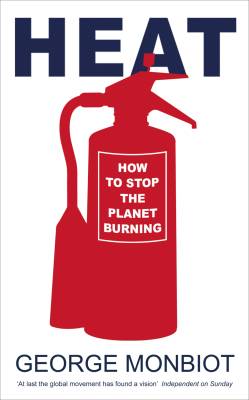
I have been thinking of starting this blog about Food Urbanism for some time. Apart from my usual procrastination, I couldn't figure out how to begin - the blank page has always intimidated me. Sitting in the departure lounge of Terminal 4 of Heathrow Airport in London, I realised that I must begin with global warming, or more accurately with a few comments about George Monbiot’s excellent new book Heat: How to Stop the Planet Burning.

There are few places on earth where the decadence of consumerism and the glamour of international air travel embrace each other so completely. I could not be described as a shopper, I avoid the retail experience as much as possible, but I am fascinated by this place where you can buy so many of the good things of life while waiting to jet off to exotic locations. While I have generally failed as a consumer, I have been a frequent flier for significant periods of my life, traveling through Europe, Africa and Asia as a kid, and numerous trips over the past 15 years between my family home near Toronto, Canada and my adoptive home in Dublin, Ireland. A few years ago I stopped keeping track at well over 100 flights, many of them long-haul. This is enough to put me into the elite realm of serious environmental destructors. I am responsible for producing more greenhouse gases than all but the tiniest minority of the 6+ billion people with whom I share this stressed planet and its paper thin atmosphere.

When Monbiot's new book came out last month, I knew that I would read it sooner or later, but it was after a friend recommended it so enthusiastically that I picked it up to read on my flight to Vancouver. The purpose of my trip was to attend the Bridging Borders Toward Food Security Conference and to do some research into Vancouver examples of Urban Agriculture (more on that later). Thus I found myself waiting in Terminal 4, slightly shocked to find numerous copies of Heat prominently displayed as the latest non-fiction offering to the jet setting masses.


Reading Monbiot's description of the threats posed by global warming while cruising at 12000 metres is tough. When he makes the case that there are no options for reducing the damage caused by air travel except by massively restricting the number and length of flights, I felt so guilty that I was desperate to get off the plane. Imagine an habitual dieter gorging on a huge tub of decadent ice cream while being subjected to a continual stream of images of obese, unhealthy people. I think that this would be similar to my feelings of guilt, with a crucial difference. It is likely that I will suffer far less because of my carbon binge than many other people living in distant lands about whom I usually hear only tragic news - if I hear anything at all.

This book is heavy stuff. Monbiot does not pull any punches as he presents the devastating realities that we face. But it is far more important as an investigation into solutions. I agree with Monbiot about the likely severity of global warming and about the depth and urgency of the cuts we need to make to our CO2 emissions, but more importantly I share his belief that we can prevent the worst effects of global warming. He set himself the task of trying to figure out how we, those of us in rich/developed/industrialised nations, can reduce carbon dioxide emissions by 90% within 25 years. He expected to fail in this task, but after completing the book he feels that it is feasible. By feasible he means "compatible with industrial civilisation." Although I could argue the appropriateness or desirability of maintaining the dominant model of what constitutes 'the good life', I will let it pass for now, except to say that I believe that his most significant fault is a failure to conceive that another world is indeed possible.

In his introduction, Monbiot provides a very interesting view of our situation:
Fossil fuels helped us to fight wars of a horror never contemplated before, but they also reduced our need for war. For the first time in human history - indeed for the first time in biological history - there was a surplus of available energy. We could survive without having to fight someone for the resources we needed. Our freedoms, our comforts, our prosperity are all the products of fossil carbon, whose combustion creates the gas carbon dioxide, which is primarily responsible for global warming. Ours are the most fortunate generations that have ever lived. Ours might also be the most fortunate generations that ever will. We inhabit the brief historical interlude between ecological constraint and ecological catastrophe.(my emphasis)

I believe that this ecological catastrophe of global warming can be prevented without reverting to a situation where ecological constraints forces everyone to fight over dwindling resources. I believe that we can do this and still have our freedoms, our comforts and our prosperity - but we will have to readjust our interpretation of what constitutes freedom, comfort and prosperity.

This is where food comes in. Our food supply systems are heavily dependent on fossil fuels at all stages in the process of getting food from the farm (or more accurately the factory) to our tables. Taken as a whole, our food supply system is one of the greatest generators of greenhouse gases, but those involved in trying to prevent global warming seem largely unaware of this fact - Monbiot included. All it takes is a quick scan through the index of his book to note the absence of anything food related, let alone any details of how systemic changes in the way that our food is produced can significantly reduce the warming of our planet. He discusses possible energy, transport and housing strategies at length, but hardly mentions how we might change the way that we feed ourselves. I have found this to be typical of much of the climate change debate, and it strikes me as both a significant lack of awareness of the issues and a missed opportunity.

There are many reasons why we would want to change the way our food is grown, processed, transported, sold, consumed and discarded, but the threat of global warming provides the ecological imperative to radically transform our food systems. I believe that one of the most effective way of reducing our greenhouse gas emissions is to change how food is produced, to change what we eat and when, to change our relationships with those who grow, process and sell it, and, most importantly, to change the location of our food production. In fact, I am convinced that we will not be able to prevent the ecological catastrophe which Monbiot so clearly describes, without reintegrating human habitation, economy, politics, society and culture with food production.

This is the basis, and primary motivation, for this blog.